


- Medical directory
- Specialities
- Specialised Units
 Teknon Cardiology Institute
 Obesity Unit
 Teknon Oncology Institute
 Bloodless Medicine and Surgery Unit
 Teknon Institute of Neurosciences
 Traffic Accident Care Unit
 Teknon Pulmonology Unit
 Maritime Medicine Unit
 Institute of Tissue Regenerative Therapy
 Teknon Pain Treatment Unit
 Teknon Tennis Clinic
 Systemic Inflammatory and Autoimmune Diseases Unit
 Assisted Reproduction Unit
 Sleep Unit
 Unidad de Síndromes de Sensibilización Central
 Unidad del Virus del Papiloma Humano
- Specialised Units
- Diagnostics
- Diagnostic tests
 Diagnostic ImagingDiagnostic and interventional scans.
 Anatomical pathology laboratoryAllows to obtain a second opinion from renowned specialists.
 Clinical Analysis LaboratoryComprehensive service in the clinical area.
 EndoscopyAn accurate diagnosis without conventional surgery.
 ElectrophysiologyFunctional exploration of the central nervous system.
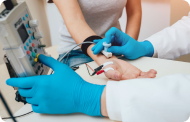 ElectromyographyClinical and neurophysiological evaluation of neuromuscular pathology.
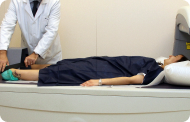 DensitometryDiagnostic technique for checking bone mineral density.
 UrodynamicsDiagnosis of urination disorders and incontinence.
- Medical check-ups

 GeneralThe most intelligent health check-up
 FullA comprehensive examination of your health
 Full PlusOur most exclusive check-up
 TravellersWhen travelling, your health is also part of your luggage
 SportA thorough review to boost your performance
 CardiologyGood news is knowing your heart is under control
 For companiesA tool that enhances employee satisfaction, productivity, and loyalty
- Diagnostic tests
- Our centre
- Teknon Healthcare Service Areas
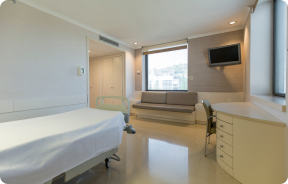 InpatientBright, functional and fully equipped rooms.
 Semi-critical Care UnitEquipped with technology for diagnoses and treatments that require special care.
 Healthy Nutrition ProgrammeWe want to improve people’s health, which is why we promote healthy, conscious and sustainable nutrition at our hospitals.
 NursingOver 400 professionals.
 Emergency DepartmentUninterrupted operation, 24/7 at your service.
 Exclusivity / Teknon ClubCommitted to superior and individualised service, we furnish a full range of services in conjunction with our medical and healthcare support.
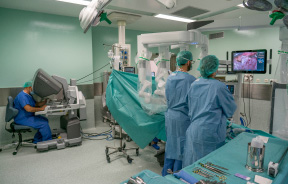 Surgical AreaA total of twenty (20) operating theatres, 12 of which are equipped for high-risk surgery.
 International ProgrammeA programme agent will provide you with comprehensive, personalised support
 Healthcare Ethics CommitteeGuidance for citizens and professionals in cases of moral conflicts.
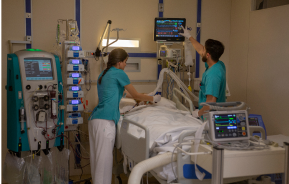 ICU-CCUMultipurpose unit incorporating treatment cubicles equipped with modern monitoring systems.
 Patient servicesAvailable to all our patients and their companions.
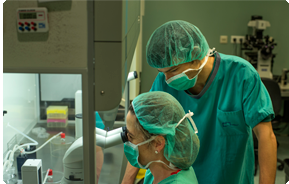 ResearchResearch is one of the cornerstones of Centro Médico Teknon.
 Personalised Follow-up ProgrammeWe accompany you throughout your medical journey. We organise your appointments and tests.
 Patient Quality and SafetyOur management models are based on the most stringent national and international standards.
- Teknon Healthcare Service Areas
- News
- News
 NewsKeep abreast of the events at Centro Médico Teknon. Visit our News section.
 AgendaHere we post upcoming events and discussions on relevant health topics. Visit our Agenda section to see what’s up.
 VideosThis section contains an extensive collection of videos related to our specialities.
 PodcastOur specialists discuss current medical topics, innovative treatments, health advice and patient experience.
 Health content
- News
- Blog


- Medical directory
- Specialities
- Specialised Units
- Teknon Cardiology Institute
- Obesity Unit
- Teknon Oncology Institute
- Bloodless Medicine and Surgery Unit
- Teknon Institute of Neurosciences
- Traffic Accident Care Unit
- Teknon Pulmonology Unit
- Maritime Medicine Unit
- Institute of Tissue Regenerative Therapy
- Teknon Pain Treatment Unit
- Teknon Tennis Clinic
- Systemic Inflammatory and Autoimmune Diseases Unit
- Assisted Reproduction Unit
- Sleep Unit
- Unidad de Síndromes de Sensibilización Central
- Unidad del Virus del Papiloma Humano
- Specialised Units
- Diagnostics
- Diagnostic tests
- Diagnostic ImagingDiagnostic and interventional scans.
- Anatomical pathology laboratoryAllows to obtain a second opinion from renowned specialists.
- Clinical Analysis LaboratoryComprehensive service in the clinical area.
- EndoscopyAn accurate diagnosis without conventional surgery.
- ElectrophysiologyFunctional exploration of the central nervous system.
- ElectromyographyClinical and neurophysiological evaluation of neuromuscular pathology.
- DensitometryDiagnostic technique for checking bone mineral density.
- UrodynamicsDiagnosis of urination disorders and incontinence.
- Medical check-ups
- GeneralThe most intelligent health check-up
- FullA comprehensive examination of your health
- Full PlusOur most exclusive check-up
- TravellersWhen travelling, your health is also part of your luggage
- SportA thorough review to boost your performance
- CardiologyGood news is knowing your heart is under control
- For companiesA tool that enhances employee satisfaction, productivity, and loyalty
- Diagnostic tests
- Our centre
- Teknon Healthcare Service Areas
- InpatientBright, functional and fully equipped rooms.
- Semi-critical Care UnitEquipped with technology for diagnoses and treatments that require special care.
- Healthy Nutrition ProgrammeWe want to improve people’s health, which is why we promote healthy, conscious and sustainable nutrition at our hospitals.
- NursingOver 400 professionals.
- Emergency DepartmentUninterrupted operation, 24/7 at your service.
- Exclusivity / Teknon ClubCommitted to superior and individualised service, we furnish a full range of services in conjunction with our medical and healthcare support.
- Surgical AreaA total of twenty (20) operating theatres, 12 of which are equipped for high-risk surgery.
- International ProgrammeA programme agent will provide you with comprehensive, personalised support
- Healthcare Ethics CommitteeGuidance for citizens and professionals in cases of moral conflicts.
- ICU-CCUMultipurpose unit incorporating treatment cubicles equipped with modern monitoring systems.
- Patient servicesAvailable to all our patients and their companions.
- ResearchResearch is one of the cornerstones of Centro Médico Teknon.
- Personalised Follow-up ProgrammeWe accompany you throughout your medical journey. We organise your appointments and tests.
- Patient Quality and SafetyOur management models are based on the most stringent national and international standards.
- Teknon Healthcare Service Areas
- News
- News
- NewsKeep abreast of the events at Centro Médico Teknon. Visit our News section.
- AgendaHere we post upcoming events and discussions on relevant health topics. Visit our Agenda section to see what’s up.
- VideosThis section contains an extensive collection of videos related to our specialities.
- PodcastOur specialists discuss current medical topics, innovative treatments, health advice and patient experience.
- Health content
- News
- Blog


- Specialised Units
 Endoscopy and Digestive Functional Testing Unit
- Treatments and Specialities
- Diagnostic endoscopy
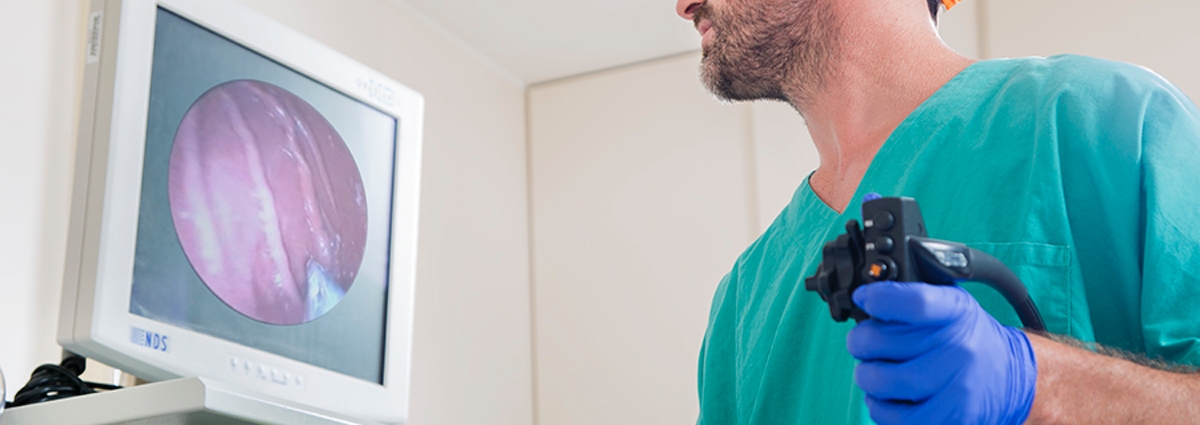
Diagnostic endoscopy
Techniques and/or treatments:
Endoscopic capsule
Endoscopic capsule
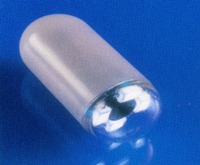 The endoscopic capsule is an imaging diagnostic technique used to study the small intestine. It is primarily useful in the study of unexplained anaemia, bleeding of unknown origin, and for monitoring patients with inflammatory bowel disease. It is particularly small (26 x 11 mm), which makes it easy to swallow. The capsule records images that are stored in a Holter-type recorder, which are then analysed by the doctor.
Does it require any preparation?
Yes. Three days before the test, the patient should follow a low-residue diet and, 24 hours before, drink a laxative solution (such as Phospho-soda) to ensure that the bowel is completely empty.
What does the examination involve?
After fasting for 12 hours, the patient swallows the capsule. After four hours, the patient may eat a light meal. The patient will return to the medical centre after 7 to 8 hours to have the monitor removed. The examination does not require hospital admission.
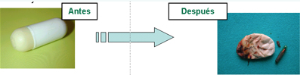 The capsule moves thanks to normal peristaltic movements (contractions of the intestines) and does not require air insufflation, allowing the intestine to be viewed without pain or abdominal distension. After 24–48 hours, it is spontaneously expelled through the anus.
New developments in capsules: resorbable capsules
In case of suspected intestinal obstruction, we have a resorbable capsule that dissolves and is eliminated within 48 hours without causing discomfort.
Images obtained with endoscopic capsule
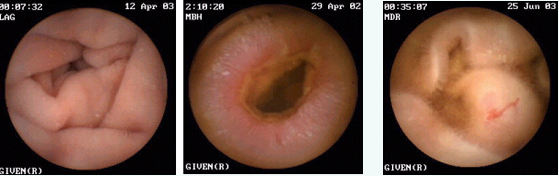
Jejunal mucosa (left) and intestinal ulcer - Vascular lesion
Further information on endoscopic capsules
- Colon capsule: Refer to the Colon Capsule section
- Oesophageal capsule
- Patency capsule: Refer to the Patency Capsule section.
Enteroscopy
What is it?
The double-balloon enteroscope is a new endoscopic device that allows diagnosis and treatment of small intestine lesions that were previously inaccessible without surgery due to the considerable length of this organ (approximately 8 metres). Designed in Japan by Dr Hironori Yamamoto in 1998 and introduced to the market in 2004, this push-pull endoscope advances through the intestine by inflating and deflating two balloons, allowing treatment (coagulation, polypectomy, sclerosis, and biopsies) of identified lesions. The double-balloon enteroscope at Centro Médico Teknon's Endoscopy Unit is the first to operate in Catalonia, and the only one in a private medical centre in Spain.
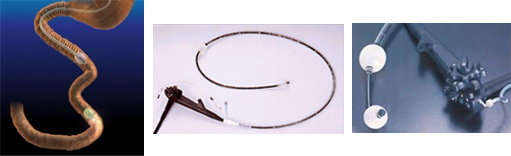
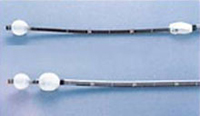
Double-balloon enteroscope advancement system through the small intestine - 200-centimetre enteroscope (with deflated balloons) - Double-balloon system with overtube (with inflated balloons)
When is it used?
The double-balloon enteroscope not only complements the capsule endoscope by treating identified lesions, but also serves as an alternative to its use. It can also be used when the capsule does not detect bleeding lesions that are clinically evident (such as in cases of anaemia), or when examining other small intestine pathologies that were previously inaccessible, unless open or laparoscopic surgery with transmural biopsy sampling is performed.
What are its indications?
- Gastrointestinal bleeding of unknown cause
- Treatment of lesions identified in the jejunum-ileum with capsule endoscopy study
- Polyposis
- Study of diarrhoea and abdominal pain
- Suspected small bowel Crohn's disease
- Radiological alterations of the small intestine
- Overtube advancement system (with inflated balloons)
What preparation does the test require?
Preparation is the same as for a colonoscopy, i.e. it requires adhering to a specific diet and consuming a laxative solution the day before the test.
Fasting for 6 hours before the test is required in order to ensure safe sedation.
How is it performed?
The test can be performed on an outpatient basis, under sedation controlled by the anaesthetist; it lasts between 1 and 2 hours, with slight discomfort afterwards due to air insufflated into the digestive tract.
It is performed in the same way as an endoscopy, by inserting the enteroscope through the mouth. In some cases, it must be completed by introducing it through the anus to access the final sections of the ileum.
Endoscopic tests
Conventional endoscopy
- Video gastroscopy
- Video colonoscopy with ileoscopy
- Biopsy and cytology sampling
- Small intestine study using capsule endoscopy.
- Diagnostic endoscopic ultrasound.
Therapeutic endoscopy
- Treatment of polypoid or mucosal lesions ranging from millimetres to large lesions using polypectomy, mucosectomy, submucosal dissection or transmural resection of both the upper digestive tract (oesophagus, stomach, duodenum) and lower digestive tract (colon, rectum).
- Endoscopic treatment of achalasia. Peroral endoscopic myotomy (POEM). Dilation, botulinum toxin injection.
- Resection of subepithelial tumours
- Endoscopic myotomy of Zenker's diverticulum
- Treatment of Barrett's oesophagus with dysplasia or carcinoma in situ. Mucosectomy, submucosal dissection, radiofrequency and argon.
- Endoscopic treatment of gastroesophageal reflux. Transoral Incisionless Fundoplication (TIF) techniques, Combined TIF (cTIF), Anti-Reflux Mucosectomy and Ablation (ARMS).
- Therapeutic ERCP (Endoscopic Retrograde Cholangiopancreatography) with treatment of biliary and pancreatic pathology.
- Therapeutic endoscopic ultrasound with puncture drainage of abscesses, pancreatic necrosis, and pseudocysts. Neurolysis, gastroenterostomy creation, fiducial marking for radiotherapy treatment.
- Double balloon enteroscopy for diagnosis and treatment of small intestine lesions.
- Dilatations and treatment of fistulas and leaks in the digestive tract.
- Endoscopic gastrostomy, endoscopic jejunostomy.
- Bariatric endoscopy. Primary treatment of obesity and repair after bariatric surgery.
Digestive function and other tests
- Oesophageal manometry
- Anorectal manometry
- 24-hour oesophageal pH monitoring
- Anorectal biofeedback
- Endoscopic capsule
- Breath tests for studying food intolerances (breath test)
Paediatric endoscopy
Paediatric endoscopy enables the diagnosis and treatment of various digestive system conditions in infants and children.
Digestive endoscopy is indicated as a complementary test for diagnosing digestive tract conditions, including malformations, polyps, bleeding, tumours, oesophagitis, and suspected gastric or duodenal ulcers. It is also indicated for diagnosing malabsorption or poor digestion of food, such as coeliac disease.
It can also be used to extract foreign bodies swallowed by children.
It is an outpatient procedure and anaesthesia is only used in certain cases.