


- Medical directory
- Specialities
- Specialised Units
 Teknon Cardiology Institute
 Obesity Unit
 Teknon Oncology Institute
 Bloodless Medicine and Surgery Unit
 Teknon Institute of Neurosciences
 Traffic Accident Care Unit
 Teknon Pulmonology Unit
 Maritime Medicine Unit
 Institute of Tissue Regenerative Therapy
 Teknon Pain Treatment Unit
 Teknon Tennis Clinic
 Systemic Inflammatory and Autoimmune Diseases Unit
 Assisted Reproduction Unit
 Sleep Unit
 Unidad de Síndromes de Sensibilización Central
 Unidad del Virus del Papiloma Humano
- Specialised Units
- Diagnostics
- Diagnostic tests
 Diagnostic ImagingDiagnostic and interventional scans.
 Anatomical pathology laboratoryAllows to obtain a second opinion from renowned specialists.
 Clinical Analysis LaboratoryComprehensive service in the clinical area.
 EndoscopyAn accurate diagnosis without conventional surgery.
 ElectrophysiologyFunctional exploration of the central nervous system.
 ElectromyographyClinical and neurophysiological evaluation of neuromuscular pathology.
 DensitometryDiagnostic technique for checking bone mineral density.
 UrodynamicsDiagnosis of urination disorders and incontinence.
- Medical check-ups

 GeneralThe most intelligent health check-up
 FullA comprehensive examination of your health
 Full PlusOur most exclusive check-up
 TravellersWhen travelling, your health is also part of your luggage
 SportA thorough review to boost your performance
 CardiologyGood news is knowing your heart is under control
 For companiesA tool that enhances employee satisfaction, productivity, and loyalty
- Diagnostic tests
- Our centre
- Teknon Healthcare Service Areas
 InpatientBright, functional and fully equipped rooms.
 Semi-critical Care UnitEquipped with technology for diagnoses and treatments that require special care.
 Healthy Nutrition ProgrammeWe want to improve people’s health, which is why we promote healthy, conscious and sustainable nutrition at our hospitals.
 NursingOver 400 professionals.
 Emergency DepartmentUninterrupted operation, 24/7 at your service.
 Exclusivity / Teknon ClubCommitted to superior and individualised service, we furnish a full range of services in conjunction with our medical and healthcare support.
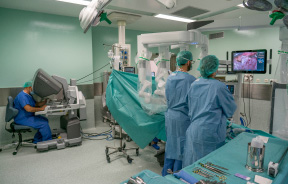 Surgical AreaA total of twenty (20) operating theatres, 12 of which are equipped for high-risk surgery.
 International ProgrammeA programme agent will provide you with comprehensive, personalised support
 Healthcare Ethics CommitteeGuidance for citizens and professionals in cases of moral conflicts.
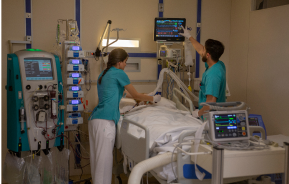 ICU-CCUMultipurpose unit incorporating treatment cubicles equipped with modern monitoring systems.
 Patient servicesAvailable to all our patients and their companions.
 ResearchResearch is one of the cornerstones of Centro Médico Teknon.
 Personalised Follow-up ProgrammeWe accompany you throughout your medical journey. We organise your appointments and tests.
 Patient Quality and SafetyOur management models are based on the most stringent national and international standards.
- Teknon Healthcare Service Areas
- News
- News
 NewsKeep abreast of the events at Centro Médico Teknon. Visit our News section.
 AgendaHere we post upcoming events and discussions on relevant health topics. Visit our Agenda section to see what’s up.
 VideosThis section contains an extensive collection of videos related to our specialities.
 PodcastOur specialists discuss current medical topics, innovative treatments, health advice and patient experience.
 Health content
- News
- Blog


- Medical directory
- Specialities
- Specialised Units
- Teknon Cardiology Institute
- Obesity Unit
- Teknon Oncology Institute
- Bloodless Medicine and Surgery Unit
- Teknon Institute of Neurosciences
- Traffic Accident Care Unit
- Teknon Pulmonology Unit
- Maritime Medicine Unit
- Institute of Tissue Regenerative Therapy
- Teknon Pain Treatment Unit
- Teknon Tennis Clinic
- Systemic Inflammatory and Autoimmune Diseases Unit
- Assisted Reproduction Unit
- Sleep Unit
- Unidad de Síndromes de Sensibilización Central
- Unidad del Virus del Papiloma Humano
- Specialised Units
- Diagnostics
- Diagnostic tests
- Diagnostic ImagingDiagnostic and interventional scans.
- Anatomical pathology laboratoryAllows to obtain a second opinion from renowned specialists.
- Clinical Analysis LaboratoryComprehensive service in the clinical area.
- EndoscopyAn accurate diagnosis without conventional surgery.
- ElectrophysiologyFunctional exploration of the central nervous system.
- ElectromyographyClinical and neurophysiological evaluation of neuromuscular pathology.
- DensitometryDiagnostic technique for checking bone mineral density.
- UrodynamicsDiagnosis of urination disorders and incontinence.
- Medical check-ups
- GeneralThe most intelligent health check-up
- FullA comprehensive examination of your health
- Full PlusOur most exclusive check-up
- TravellersWhen travelling, your health is also part of your luggage
- SportA thorough review to boost your performance
- CardiologyGood news is knowing your heart is under control
- For companiesA tool that enhances employee satisfaction, productivity, and loyalty
- Diagnostic tests
- Our centre
- Teknon Healthcare Service Areas
- InpatientBright, functional and fully equipped rooms.
- Semi-critical Care UnitEquipped with technology for diagnoses and treatments that require special care.
- Healthy Nutrition ProgrammeWe want to improve people’s health, which is why we promote healthy, conscious and sustainable nutrition at our hospitals.
- NursingOver 400 professionals.
- Emergency DepartmentUninterrupted operation, 24/7 at your service.
- Exclusivity / Teknon ClubCommitted to superior and individualised service, we furnish a full range of services in conjunction with our medical and healthcare support.
- Surgical AreaA total of twenty (20) operating theatres, 12 of which are equipped for high-risk surgery.
- International ProgrammeA programme agent will provide you with comprehensive, personalised support
- Healthcare Ethics CommitteeGuidance for citizens and professionals in cases of moral conflicts.
- ICU-CCUMultipurpose unit incorporating treatment cubicles equipped with modern monitoring systems.
- Patient servicesAvailable to all our patients and their companions.
- ResearchResearch is one of the cornerstones of Centro Médico Teknon.
- Personalised Follow-up ProgrammeWe accompany you throughout your medical journey. We organise your appointments and tests.
- Patient Quality and SafetyOur management models are based on the most stringent national and international standards.
- Teknon Healthcare Service Areas
- News
- News
- NewsKeep abreast of the events at Centro Médico Teknon. Visit our News section.
- AgendaHere we post upcoming events and discussions on relevant health topics. Visit our Agenda section to see what’s up.
- VideosThis section contains an extensive collection of videos related to our specialities.
- PodcastOur specialists discuss current medical topics, innovative treatments, health advice and patient experience.
- Health content
- News
- Blog


- Specialised Units
 Endoscopy and Digestive Functional Testing Unit
- Treatments and Specialities
- Gastroesophageal reflux
Gastroesophageal reflux
General information
Gastroesophageal reflux disease (GERD) is a very common condition, occurring when the contents of the stomach flow back into the tube connecting the mouth to the stomach (oesophagus). This reflux occurs due to a malfunction in the lower oesophageal sphincter, a circular band of muscle at the lower end of the oesophagus that typically relaxes to allow food and liquids to enter the stomach before closing again.
The most common symptoms are a burning sensation in the stomach and chest, generally after eating and sometimes worsening at night. Other symptoms, termed atypical but no less frequent, include chest pain, difficulty swallowing, regurgitation (food returning to the mouth), a sensation of a lump or "constant mucus" in the throat, dental erosion, chronic cough, laryngitis, asthma, and sleep disturbances.
GERD may be mild with minimal symptoms and easy to control, but it can also be severe, causing frequent symptoms, reduced quality of life, and sometimes complications. GERD can lead to oesophageal ulcers, strictures (oesophageal narrowing due to continuous inflammation), digestive bleeding, Barrett’s oesophagus, and cancer.
Causes and risk factors
The cause of the disease is frequent acid reflux, which irritates the normal lining of the oesophagus and upper airway due to dysfunction of the lower oesophageal sphincter.
Some situations may increase the risk of developing the disease: obesity, pregnancy, having a hiatal hernia (a condition where part of the stomach protrudes into the thorax through the diaphragm), some conditions (scleroderma, gastroparesis, etc.), smoking, certain foods (chocolate, fatty foods, alcohol, large meals, etc.), and some medications (benzodiazepines, some antihypertensives, etc.).
When to see a doctor
Book a medical appointment if you frequently experience reflux symptoms (more than twice a week) or if you regularly take medication.
You should seek immediate medical care if you have symptoms of alarm such as difficulty swallowing, pain when swallowing, vomiting, anaemia, weight loss or loss of appetite, or black stools.
If you have chest pain radiating to the throat or left arm with a feeling of pressure, go immediately to hospital as this could indicate a cardiac problem. If cardiac pathology is ruled out, you should be assessed by a digestive specialist for possible atypical reflux.
Conventional treatment
GERD treatment should be individualised. The cornerstone of treatment involves lifestyle changes (habits, diet, etc.) alongside pharmacological treatment, primarily using proton pump inhibitors (PPIs), which are known to have some side effects. Most people manage symptoms with medication and lifestyle changes; however, some patients need high medication doses or surgery to alleviate their symptoms. Until recently, fundoplication, a surgical procedure that creates a valve between the oesophagus and stomach, was the only option when medication was insufficient or undesirable as a lifelong treatment, although it carries risks and side effects. Since March 2018, our unit has offered a novel endoscopic technique to treat gastroesophageal reflux.
New non-surgical technique for treating gastroesophageal reflux: TIF 2.0 with EsophyX-Z
We currently have the option of performing a transoral incisionless fundoplication (TIF) using the EsophyX-Z system.
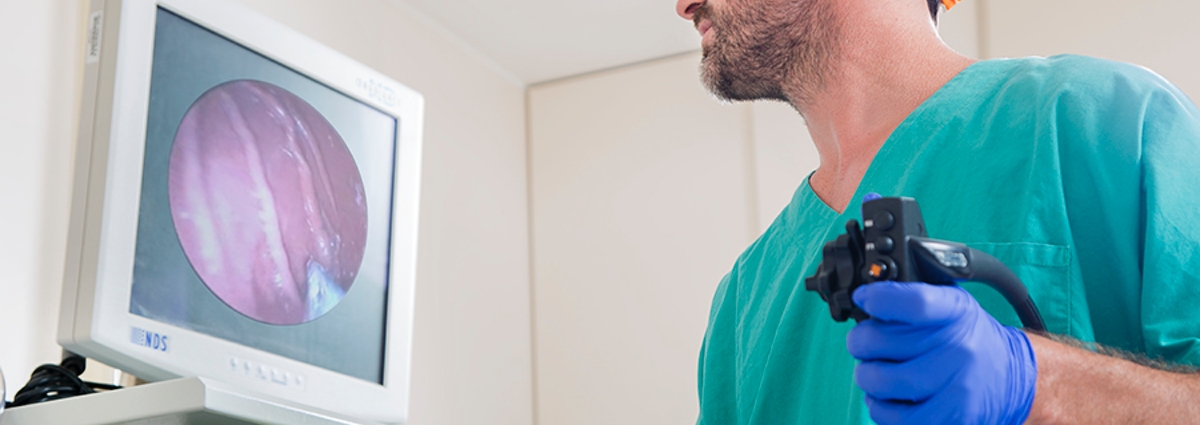
The EsophyX device is designed to reconstruct the gastroesophageal valve (GEV) and help restore its function as a reflux barrier by creating a 2-3 cm, 270º fundoplication from within the stomach without incisions, guided by endoscopy. It is indicated for patients with a loose cardia or a small hiatal hernia (2 cm).
This procedure offers a surgical alternative with many benefits such as greater patient comfort and fewer associated risks.
What are the results of the EsophyX-Z procedure?
The EsophyX-Z 2.0 system can improve your symptoms of GERD and potentially eliminate them completely. The available results show a significant improvement in quality of life (in 66-86% of patients according to various studies), an objective improvement determined by an 80% reduction in medication use (ranging from 59-97%), and approximately 80% healing of oesophagitis (57-87%). Five-year studies show a persistence of 66% of patients not using PPIs, control of regurgitation in 86%, and atypical symptoms in 80%.
How is the procedure carried out?
The procedure is performed under general anaesthesia and typically lasts 60 to 90 minutes. The EsophyX-Z system is inserted orally into the stomach, where fundoplication is performed with polypropylene sutures. Once completed, the patient will remain admitted for 24 hours. Upon discharge, a liquid and soft diet must be followed for a few days, gradually progressing to a normal diet. As it is an endoscopic procedure, patients can resume normal daily activities 1 to 2 weeks after the intervention, resulting in faster recovery.
Is it painful?
After the intervention, some patients experience a sore throat and mild pain in the upper abdomen and central chest, but these are mild symptoms that generally disappear within a few days.
How do I know if I am a candidate for the EsophyX-Z system?
Anyone over 18 years old who has been diagnosed with chronic symptomatic gastroesophageal reflux disease requiring and responding to pharmacological therapy. The device is also indicated to reinforce the gastroesophageal junction and reduce hiatal hernia ≤ 2 cm in size in patients with chronic symptomatic GERD. Each patient must be individually evaluated in the consultation.